Meet the Machine
Used Accu-Cut 6SM-1 : The Production Answer to a Perfect Bore
What is the Accu-Cut 6SM-1?
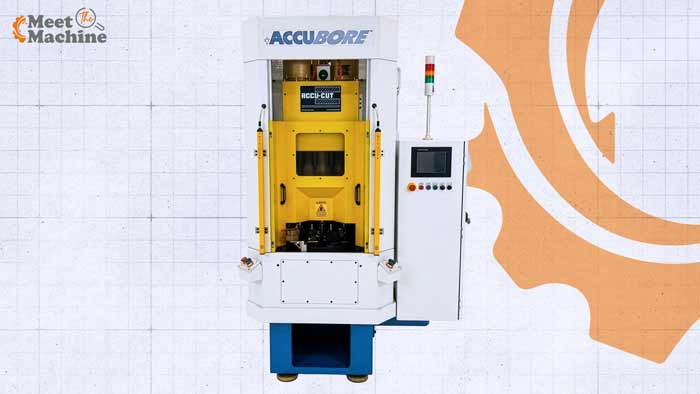
The Accu-Cut 6SM-1, also written 6SM-I, is a six-spindle vertical single-pass diamond bore-sizing machine, a type of production honing machine that finishes the inside diameter of metal parts. Instead of an expanding hone that has to measure, expand, and remeasure, it pushes a set of fixed-size, diamond-coated tools through the bore in single strokes, each tool a little larger and finer than the last, until the bore is exactly to size, straight, round, and to the right finish. Six spindles on an indexing table turn that into production volume. It handles bores up to 1.5 inches on parts up to 5 inches, and it is built for high-volume automotive, fuel-system, hydraulic, and precision component work where every bore has to come out identical.
A bore is one of the hardest features to get right at volume. Drilling and boring get you close, but they leave a hole that is a little undersize, a little rough, and rarely as round or straight as a finished part needs. On one or two parts you can chase the last few tenths by hand. On ten thousand parts that all have to seal, slide, or press-fit the same way, chasing it by hand is not an option. You need a process that puts every bore at the same size, roundness, and finish, part after part, without a skilled operator babysitting each one.
That is the job the Accu-Cut 6SM-1 was built to do. It is a production bore-finishing machine, and the way it gets there, single-pass diamond bore sizing across six spindles, is what makes it different from the honing machine most people picture. This is a working breakdown of what it is, how it works, who runs it, and what to check before you buy a used one.
What Single-Pass Bore Sizing Actually Is
Start with the process, because it is the whole reason this machine exists. A conventional hone uses abrasive stones that expand and contract while the tool strokes up and down in the bore. It works, and it is flexible, but controlling the exact final size and roundness takes skill and time, because the tool is changing diameter as it cuts.
Single-pass bore sizing throws that out. Instead of one expanding tool, it uses a series of fixed-size tools, each one a sleeve electroplated with diamond abrasive, set to a precise diameter. The tool passes through the bore in a single in-and-out stroke while rotating, and because it is a fixed size, it removes a known, predetermined amount of material and leaves the bore at a known diameter. Line up several of these tools, each set a little larger than the last in shrinking increments, with the diamond grit getting finer as the tools get bigger, and you have a staged process: the first tools take the most material with coarser grit, the last tools take a whisker with fine grit for finish. After the final pass the bore is to size, straight, round, and finished, with far less operator judgment than an expanding hone demands.
An expanding hone asks the operator to hit the size. A single-pass tool is the size. That is the difference between a skilled craft and a repeatable process, and at volume, repeatable wins.
How the Six Spindles Work
Now put that staged process on a production machine. The 6SM-1 carries six spindles over an eight-station indexing table. Each spindle holds the next tool in the progression, from the roughing size up to the final finishing size. A part is loaded, and as the table indexes, the part moves from spindle to spindle, taking one pass at each, growing to final size in stages. By the time it comes off, it has been through the whole progression and it is done, to size and to finish, in one cycle.
The machine runs two modes depending on the job. In the standard mode it makes six progressive passes on one part per cycle, using the full tool progression for the tightest results. In double-index mode it runs two parts per cycle with up to three passes each, trading some of the staging for higher throughput when the bore does not need all six steps. Either way, the operator is loading and unloading, not chasing size, because the size lives in the tools, not in the operator's feel.
The Specs That Matter
The numbers on the 6SM-1 all point at the same thing, controlled, repeatable production bore finishing. Treat these as representative of the configuration, and confirm the exact figures on any specific machine.
Bore and part capacity. Up to a 1.5 inch bore, on parts up to about 5 inches in outside diameter, with an 18 inch stroke. This is a small-to-mid bore machine, the range where high-volume precision components live.
Six spindles, eight stations. Six honing spindles over an eight-station index table roughly 20 inches across, so the tool progression and load and unload all happen in one rotation.
Spindle power and speed. A 7.5 HP spindle motor, variable up to 1,200 rpm, with a feed rate from 0 to 200 inches per minute. Enough to cut, controlled enough to finish.
Control. An Allen-Bradley SLC 5/03 with a PanelView 600 operator interface, a common, supportable industrial control rather than an obscure one.
Workholding and coolant. Multiple 5C collet closures for holding round parts, a coolant system with a magnetic separator to pull ferrous swarf out of the fluid, automatic lubrication, and a full enclosure. Roughly 5,500 pounds of machine.
Why Single-Pass Wins at Volume
The real payoff of this machine is statistical. Because the size is built into fixed tools rather than set by an operator each cycle, the bores come out consistent enough to hold a tight process capability across a long run. That is exactly what a customer with a print full of bore tolerances and a purchase order for a hundred thousand parts wants to see. It is also why Accu-Cut built its machine business, shops wanted a machine that could deliver the repeatability of the company's diamond tools without depending on a master honer standing at the machine.
There is a labor angle too, and it is the same one showing up across manufacturing. A single-pass machine turns a skilled, feel-based operation into a load-and-run operation. You still need someone who understands the process to set it up and keep it honest, but you do not need that person on every cycle. For a shop trying to hold precision bores in volume with the people it can actually hire, that shift matters as much as the accuracy.
The Trade-Off: Dedicated Speed vs Flexibility
Single-pass sizing is not free of downsides, and knowing them is how you know whether this is your machine. The speed and repeatability come from committing to fixed tools, and a fixed tool is sized for one bore. Change the bore diameter and you need a different tool progression, which is real money and lead time. A conventional expanding hone, by contrast, can be dialed across a range of sizes with the same tooling, so it stays flexible for a shop that runs many different bores in small numbers.
That makes the choice straightforward. If you run one bore, or a handful of steady high-volume bores, single-pass sizing on a machine like the 6SM-1 is hard to beat, because it is faster, more repeatable, and less dependent on operator skill. If your work is a constant parade of different one-off bores, a flexible hone may fit better. The 6SM-1 is a production tool, and it rewards a shop with the volume to justify dedicating tooling to a job. Buy it for the work it was built for and it pays. Buy it for job-shop variety and the tooling cost will fight you.
The Value of Buying One Used
A production bore-finishing machine is a specialized purchase, and a new turnkey system is a serious investment. A well-kept used 6SM-1 can put that capability on a floor for a fraction of the cost, and because the control is a common Allen-Bradley platform and the workholding uses standard 5C collets, it drops into a shop without an exotic support burden.
The one thing that separates a bargain from a headache on a machine like this is the tooling. Single-pass bore sizing lives on its tool sets, the progression of fixed-size diamond tools matched to your bore. A used machine that comes with tooling for a bore size close to your work is worth far more than a cheaper one you have to tool from scratch, because the tooling is where a lot of the money is. Buy the machine that fits the bore you actually run, and confirm what tooling comes with it.
What to Check on a Used 6SM-1
Spindles. Check all six spindles for runout, bearing noise, and heat. On a multi-spindle machine, one tired spindle can throw a station out, so all six need to be right.
Tooling included. Confirm what tool sets, mandrels, and fixtures come with the machine, and what bore sizes they cover. This is the single biggest factor in whether the machine is ready to earn or needs a large tooling spend.
Index table and stations. Cycle the eight-station index and check that it locates repeatably. A worn or sloppy index shows up as inconsistent parts.
Control and interface. Power up the Allen-Bradley control and PanelView, confirm it runs both modes, and check that spares are available for that generation.
Coolant and enclosure. Inspect the coolant system and magnetic separator, since clean, well-filtered coolant is essential to finish and tool life, and confirm the collets and enclosure are complete.
Who Runs an Accu-Cut 6SM-1
This machine lands wherever a small bore has to be perfect in high volume. Automotive and fuel-system suppliers use single-pass sizing on injector bodies, valve bores, and pump components where a few tenths of size or roundness decide whether the part seals. Hydraulic and pneumatic shops run it on spools and cylinders. It suits bushings, bearings, gears, and any pressed or sealed bore that has to hold size across a long production run. Accu-Cut built its reputation in exactly these industries, with its connecting-rod machines a recognized standard in engine production. The common thread is a shop making the same precise bore thousands of times and needing every one to measure the same.
Resell CNC Take
A 6SM-1 is a specialist, and that is exactly why a used one can be a smart buy for the right shop. If you are finishing small bores in volume and holding size and roundness by hand or on a conventional hone, a single-pass machine can turn that into a repeatable, load-and-run process. The whole decision comes down to tooling and fit, so before you buy, we match the machine's bore range and tool sets to the parts you actually run. Tell us the bore, the tolerance, and the volume, and we will tell you whether a used 6SM-1 is the right tool or the wrong one.
Frequently Asked Questions
What does the Accu-Cut 6SM-1 do?
The 6SM-1 is a six-spindle vertical single-pass diamond bore-sizing machine that finishes the inside diameter of metal parts to a precise size, roundness, and surface finish. It is a production honing machine used for high-volume precision bores, not a stone or engraving tool.
How is single-pass bore sizing different from honing?
Conventional honing uses abrasive stones that expand and contract as the tool strokes, so the operator has to work the tool to final size. Single-pass sizing uses fixed-size diamond tools, each a set diameter, passed through the bore in one stroke. Because the size is built into the tools, the results are more repeatable with less operator skill, which suits high-volume production.
What size bores can the 6SM-1 finish?
The 6SM-1 handles bores up to about 1.5 inches in diameter on parts up to roughly 5 inches in outside diameter, with an 18 inch stroke. It is aimed at the small-to-mid bore range typical of high-volume automotive, fuel-system, and hydraulic components. Confirm exact capacity on any specific machine.
Why does it have six spindles?
Each spindle holds the next tool in the size progression, from roughing to finishing. As parts index from spindle to spindle, each takes one pass and grows to final size in stages, so a finished bore comes off in a single cycle. It is how the machine turns a staged process into production throughput.
What should I check before buying a used 6SM-1?
Check all six spindles for runout and wear, confirm what tooling and bore sizes come with the machine, cycle the index table for repeatable location, power up the Allen-Bradley control, and inspect the coolant and collets. Tooling is the biggest factor, since single-pass sizing depends on tool sets matched to your bore.
What industries use the Accu-Cut 6SM-1?
Automotive and fuel-system manufacturers, hydraulic and pneumatic shops, and makers of bushings, bearings, gears, and connecting rods use it for high-volume precision bores. Accu-Cut is well established in automotive and aerospace bore finishing, and its connecting-rod machines are a recognized production standard.
In the Market for a Bore-Finishing Machine?
See what we have on the floor.
Every machine we sell is inspected by a team with 200+ years of combined industry experience and four AMEA and CEA certified equipment appraisers on staff, spindles, tooling, and index included.
See Accu-Cut Machines
About the Author
Bill Murphy is the Marketing and Content Lead at Resell CNC. The Meet the Machine series breaks down specific machines, what they do, who runs them, and what to look for when buying one used.
About Resell CNC
Resell CNC has bought and sold used CNC machinery since 2008. Based in Maitland, Florida, with warehouses in Winter Springs and Longwood, the team brings more than 200 years of combined industry experience and four AMEA and CEA certified equipment appraisers on staff. Resell CNC has been an MDNA member since 2009 and is the only used CNC dealer in North America with Official Mazak Trade-In Center status.
Sources
- Accu-Cut 6SM-I Accu-Bore single-pass vertical honing machine listing and specifications, Liberty Machinery
- Single-Pass Honing and Bore Finishing systems, Accu-Cut Diamond Tool
- Single-pass bore finishing process overview, industry references
- Accu-Cut Diamond Tool Co. company and applications information