Buyer's Guide
Why Add a Bar Feeder to Your CNC Lathe?
What is a CNC Bar Feeder?
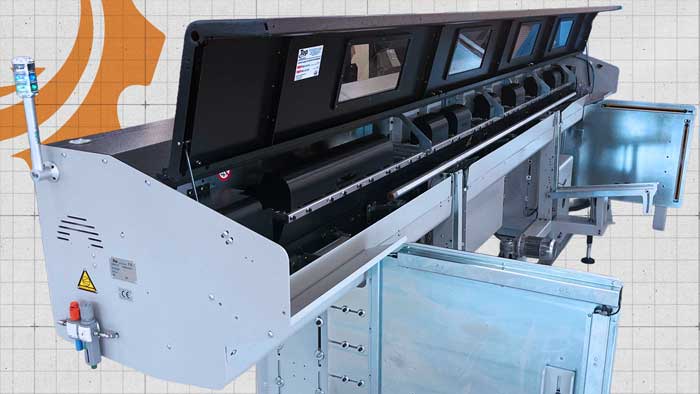
A CNC bar feeder is an automated material handling system that loads metal bar stock into a CNC lathe or Swiss-type turning center, enabling continuous unattended production. The bar feeder advances raw material through the machine's spindle bore, eliminating the manual reload step between every part and converting a one-bar-at-a-time setup into a cell that can run for hours without operator intervention. Bar feeders fall into two main categories: short bar feeders (typically 1.2 meter magazine-fed capacity) for small-part Swiss-type work, and long bar feeders (3 to 4 meter capacity, hydraulic or servo-driven) for traditional CNC lathe production. Common manufacturers include LNS, Iemca, FMB, Edge Technologies, Edward Technologies, and Cucchi. Adding a bar feeder is the single largest spindle-utilization upgrade most shops can make to an existing CNC lathe and typically pays for itself in months on any high-volume turned-part program.
A CNC lathe without a bar feeder is a single-shot machine. The operator loads a bar, runs parts until the bar is gone, walks back over, and loads the next one. On paper, that workflow looks fine. In practice, it caps the machine at roughly half of its theoretical output, leaves an operator tied to a single spindle when they could be running two or three, and turns every lunch break, every shift change, and every loading cycle into a window where the spindle is not making chips.
Adding a bar feeder removes that ceiling. The same lathe, the same control, the same tooling, the same operator, now runs for hours without intervention. The math is straightforward enough that bar feeders have been standard equipment on production turning work for forty years. What follows is the actual buyer logic on when to add one, what to look for, and how the ROI shakes out in real shop numbers.
What a Bar Feeder Actually Does
A bar feeder sits behind the CNC lathe and pushes raw bar stock through the hollow spindle, advancing the material a part-length forward each cycle so the cutting tool can index, turn, and part off without the operator ever touching the bar. When one bar runs out, the bar feeder retracts, releases the remnant, picks up the next bar from its magazine or rack, and pushes it into position. On a properly configured cell, the only operator touch is reloading the magazine, which on a long bar feeder can be a once-a-shift event.
The result is a CNC lathe that runs through full bars unattended. Lights-out runs become possible for parts where geometry, tool life, and chip evacuation allow it. Spindle utilization climbs from the 35 to 55 percent typical of operator-loaded turning to 80 to 95 percent on a well-tuned bar-fed cell. That delta is the entire value proposition.
The ROI Math in Real Shop Numbers
A CNC lathe is somewhere between 80 and 90 percent of its capital cost in iron, controls, motors, and tooling. The bar feeder is 10 to 20 percent additional cost on top of that. What that 10 to 20 percent unlocks is the difference between a machine that runs four hours a shift and a machine that runs seven and a half.
A CNC lathe at 50 percent spindle utilization is producing four hours of billable cutting per eight-hour shift. The same machine with a bar feeder, running at 90 percent utilization, produces seven point two. At a $200 per hour spindle rate, that is $640 in additional production per shift, or roughly $128,000 a year on a 200-day calendar. A $25,000 bar feeder pays back in six weeks against that math.
The numbers vary by part program, material, and tool life. The structure of the math does not. The bar feeder converts capital that is already sunk into a CNC lathe from partially productive to fully productive, and it does so at a fraction of the cost of buying a second machine.
Short Bar Feeder or Long Bar Feeder?
The decision between a short bar feeder and a long bar feeder is driven by what kind of work the lathe is doing.
Short bar feeders handle bars up to roughly 1.2 meters in length, fed from a magazine that holds 10 to 30 bars depending on diameter. They are common on Swiss-type lathes running small-diameter precision parts like medical bone screws, electronic connectors, and aerospace fittings, where bar consumption is fast and bar changeovers happen multiple times per shift. Lower cost than long bar feeders. Simpler mechanically. Faster bar swaps. The right tool for small-diameter, high-volume Swiss work.
Long bar feeders handle bars up to 3 or 4 meters and are designed to keep a production CNC lathe running through a full shift on a single bar load. They use hydraulic or servo-driven advance with a guide channel that supports the bar from the loading end through to the spindle. Higher capital cost. More floor space. The right tool when bar changeover frequency is the constraint and operator labor is the cost.
For shops running both Swiss-type and conventional CNC turning, the answer is often one of each. The two feeder categories solve different problems and do not substitute well for each other.
Compatibility: Will It Fit Your Machine?
Not every CNC lathe takes a bar feeder, and not every bar feeder fits every lathe. The compatibility checklist is short but firm:
Spindle bore diameter. The bar has to physically pass through the spindle. Most production CNC lathes are built around standard bore sizes (40mm, 51mm, 65mm, 80mm, and up), and bar feeders are sized to match. Check the spindle bore on your machine against the bar feeder's maximum bar diameter before anything else.
Spindle length. Long bar feeders need the full bar to seat into the spindle. Sub-spindle and short-headstock machines may require a short bar feeder regardless of how the rest of the shop is configured.
Control interface. The bar feeder communicates with the lathe through M-codes for bar advance, bar-end detection, and remnant handling. Older bar feeders may not communicate cleanly with newer FANUC, Mitsubishi, or Mazatrol controls. Confirm the interface generation before purchase.
Floor space and utilities. A long bar feeder extends three to four meters behind the lathe. Hydraulic units need a hydraulic supply. Servo units need power. Plan the cell footprint before the equipment shows up on the dock.
When a Bar Feeder Does Not Make Sense
Bar feeders earn their keep on production turning. They do not make sense on every CNC lathe.
A job shop running 20-piece prototype lots with daily setup changes will not recover the bar feeder cost. Setup time dominates the program, and the bar feeder is sitting idle most of the day. Chuck work on large-diameter castings and forgings does not use bar stock at all. Lathes without hollow spindles cannot accept a bar feeder by definition. Workpieces that exceed the spindle bore have to be loaded another way.
If the answer to "how much of the shift is this machine running the same part?" is "most of it," a bar feeder is the right call. If the answer is "we change setups every couple of hours," it usually is not.
What to Check on a Used Bar Feeder
Used bar feeders are a common upgrade because they hold value, last for decades when maintained, and can often be paired with a lathe a shop already owns. The diligence list is short but important.
Machine compatibility. Confirm the bar feeder's bar diameter range, length capacity, and control interface against your specific lathe before the deal closes. A bar feeder that almost fits is a bar feeder that does not fit.
Guide channel condition. The channel or bushing the bar runs through is a wear item. Inspect for grooving, scoring, or out-of-round wear. A guide channel that has been running a single bar diameter for years may need replacement before it will run mixed work cleanly.
Hydraulic system. On hydraulic units, check pressure readings, look for leaks at fittings and cylinders, and verify the reservoir is clean. Hydraulic neglect is the most common reason a used bar feeder needs work after sale.
Manufacturer support. LNS, Iemca, FMB, Edge Technologies, and Edward Technologies all maintain U.S. service networks and parts pipelines. Lesser-known brands or units from manufacturers that have left the market are risk on year-five maintenance no matter how clean the unit looks today.
What Lathes Pair Well with Bar Feeders
Production CNC lathes with hollow spindles are the standard pairing. Mazak Quick Turn, Okuma LB series, Hyundai WIA L Series, Doosan Puma, and similar production turning centers are all built to accept long bar feeders out of the gate. The interface is standardized, the bar capacity matches typical bar feeder ranges, and the control communicates through industry-standard M-codes.
Swiss-type lathes from Citizen, Tsugami, Star, Tornos, and other manufacturers are designed around the short bar feeder model from the start. Most are sold paired with a feeder or built to accept one as a standard accessory. The bar diameter and length geometry of a Swiss lathe assumes bar-fed operation.
Conventional CNC lathes without sub-spindles work fine with short bar feeders for smaller-diameter, repetitive turning work. The geometry just has to align between the bar feeder, the spindle bore, and the chuck or collet.
Resell CNC Take
The bar feeder question is rarely "should I add one." It is "which one fits the machine I already own, and what does the math look like at my actual spindle rate." A correctly sized used bar feeder, sourced from a manufacturer with parts and support in North America, typically pays for itself inside a quarter on any production turning program running more than four hours a day on the same part family.
Frequently Asked Questions
What is a CNC bar feeder?
A CNC bar feeder is an automated material handling system that loads metal bar stock into a CNC lathe or Swiss-type turning center. The bar feeder advances raw material through the machine's spindle bore so the cutting tool can index, turn, and part off without manual operator intervention. Bar feeders convert a CNC lathe from an attended single-bar machine into a cell capable of running for hours unattended through full bars.
What is the difference between a short bar feeder and a long bar feeder?
Short bar feeders handle bars up to approximately 1.2 meters in length, fed from a magazine, and are common on Swiss-type lathes running small-diameter precision parts. Long bar feeders handle bars up to 3 to 4 meters and are designed to keep a production CNC lathe running through a full shift on a single bar load. Short feeders cost less and swap bars faster. Long feeders reduce operator touches across the shift. The two categories do not substitute well for each other.
Can any CNC lathe use a bar feeder?
No. A bar feeder requires a hollow spindle that the bar can pass through, a spindle bore diameter large enough to accept the bar stock, and a control interface that supports bar-feeder M-codes for bar advance and end-of-bar detection. Most production CNC lathes built post-2000 are bar-feeder-ready out of the gate. Chuck-only lathes and machines without hollow spindles cannot accept a bar feeder.
What does a CNC bar feeder cost?
New bar feeders range from approximately $15,000 for a basic short bar feeder up to $60,000 or more for a long bar feeder with servo advance and large-capacity magazines. Used bar feeders from major manufacturers like LNS, Iemca, FMB, Edge Technologies, and Edward Technologies typically trade in the $8,000 to $35,000 range depending on capacity, age, and condition. The ROI math usually favors the purchase regardless of new or used as long as the lathe is running production volume.
Which CNC lathes work best with a bar feeder?
Production CNC lathes with hollow spindles, including Mazak Quick Turn, Okuma LB series, Hyundai WIA L Series, Doosan Puma, and similar production turning centers, are all built to accept long bar feeders. Swiss-type lathes from Citizen, Tsugami, Star, Tornos, and other manufacturers are designed around short bar feeder operation from the start. Conventional CNC lathes without sub-spindles can pair with short bar feeders for smaller-diameter repetitive turning work.
Browse Bar-Feeder-Ready Lathes
Find your next bar-fed production lathe at Resell CNC.
Browse the current Resell CNC inventory of used CNC lathes, Swiss-type turning centers, and production turning equipment ready to pair with a bar feeder.
VIEW USED CNC LATHES
About the Author
Bill Murphy is the Marketing and Content Lead at Resell CNC, where he covers used CNC equipment, auction strategy, and the buying side of the secondary machine tool market. He works directly with the appraisal, auction, and retail teams to translate machine-level detail into content for shop owners, plant managers, and acquisition buyers.
About Resell CNC
Founded in 2008 and headquartered in Maitland, Florida, Resell CNC carries 200+ years of combined industry experience, four AMEA/CEA Certified Equipment Appraisers on staff, MDNA membership since 2009, and is the only used CNC dealer in North America with Official Mazak Trade-In Center status. The company operates across retail, auction, appraisal, and finance divisions from warehouses in Winter Springs and Longwood, Florida.