Meet the Machine
Used Fadal VMC 6030 : Big Travels at a Job-Shop Price | Meet the Machine
What is the Fadal VMC 6030?
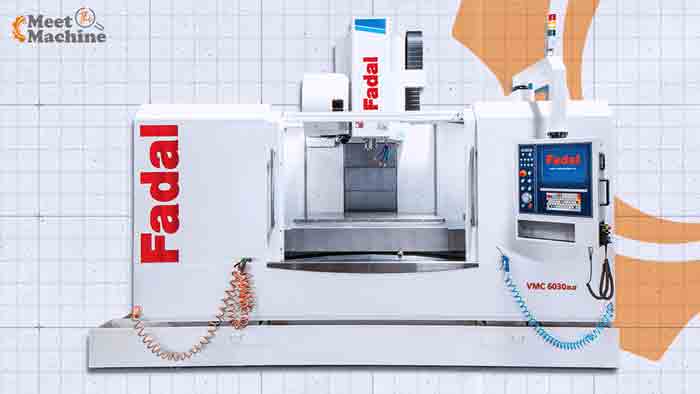
The Fadal VMC 6030 is a large-envelope American vertical machining center with 60 inches of X travel, 30 inches of Y, and 30 inches of Z, a 62.5 by 30 inch table, and a CAT 40 spindle running up to 10,000 RPM on roughly 22.5 horsepower. It is the big brother of the famous VMC 4020, built for molds, dies, fixture plates, and long parts that will not fit a standard 40-taper machine, while keeping the simple, serviceable, affordable design that made Fadal the default first CNC for a generation of job shops. Most run the proprietary CNC 88 or CNC 88HS control, with a 21-tool changer and 400 IPM rapids, and high-torque (HT) and later EMC variants add spindle and performance options. On the used market, the VMC 6030 holds value as a low-cost way to add large-part milling capacity, with the spindle and the control boards being the main factors in condition and price.
Most shops hit the wall of their machining envelope before they hit the wall of their budget. A 40 by 20 inch table covers a lot of work, until a long fixture plate, a big mold base, or a weldment shows up and suddenly the job has to go out. The Fadal VMC 6030 was the answer for thousands of American shops: five feet of X travel and a heavy table, at a price and a simplicity a job shop could actually live with. It is the machine that let a small shop say yes to the big part.
This is a working machinist's breakdown of the VMC 6030 for the person about to spend real money on a used one: where it comes from, what defines it, what the 6030 family costs today, and exactly what to check before you buy.
Where the 6030 Comes From
Fadal was founded by the de Caussin family in 1962 in Chatsworth, California, and built its name on affordable, serviceable vertical machining centers that filled tens of thousands of North American job shops through the 1980s and 1990s. The VMC 4020, with 40 inches of X travel, became the best-selling vertical machining center in American history. The VMC 6030 is the large-envelope member of that same family, built on the same simple, fixable design philosophy but scaled up to handle bigger and longer work.
That shared DNA is the whole point. The 6030 is not a different kind of machine from the 4020, it is the same approachable, rebuildable Fadal with more travel and a heavier table. Fadal was acquired by Giddings and Lewis in 1988 and later passed through ThyssenKrupp and MAG, with new production winding down around 2008, but the huge installed base kept the parts, spindle-rebuild, and control-repair ecosystem alive. For a used buyer, that means a 6030 is a legacy machine with living support, not an orphan.
What Defines the Machine
The big envelope. Sixty inches of X, thirty of Y, and thirty of Z, with a 62.5 by 30 inch table rated for thousands of pounds, is the reason to buy a 6030 over a smaller Fadal. It swallows long plates, large mold bases, and multi-part fixtures that a 4020 cannot reach.
The CAT 40 spindle. A CAT 40 cartridge spindle running up to 10,000 RPM on roughly 22.5 horsepower, with coolant-through and rigid-tapping options on many machines. The high-torque HT variants trade some top speed for more cutting torque on heavier work.
Simple, serviceable mechanics. Conventional ballscrews and slideways, an accessible 21-pocket tool changer, and a spindle that is a replaceable, rebuildable cartridge. Nothing on a 6030 is exotic, which is exactly why so many are still cutting decades later. A competent maintenance person can work on it.
The CNC 88 control. Most 6030s run the proprietary Fadal CNC 88 or CNC 88HS control, with later machines on the 32MP and certain EMC variants on Fanuc. The 88 is one of the most widely understood legacy controls in the country, with a deep base of operators and a board repair and exchange market behind it.
The 6030 Family in Shop Language
VMC 6030. The standard machine: 60 by 30 by 30 travels, CAT 40, 10,000 RPM, 21-tool ATC, CNC 88 or 88HS control. The large-envelope workhorse.
VMC 6030 HT. The high-torque version, with a spindle geared or wound for more torque at lower speeds, for heavier cutting in steel and larger tools. A common choice for mold and die work.
VMC 6030B and 6030B-II. Later revisions of the platform with running production and control updates, generally newer and carrying a modest premium over early machines.
EMC-generation 6030. The Enhanced Machining Center evolution, with faster rapids, higher spindle speeds, and Fanuc control availability on some machines. These command the strongest prices in the family.
All of them share the same large envelope and the same serviceable Fadal bones, so the choice between them comes down to spindle type, control generation, and condition rather than a fundamentally different machine.
The Problem It Was Built to Solve
Large-part milling has always carried a tax. The machines that handle a five-foot plate are usually expensive, power-hungry, and built for shops that run big work all day. But plenty of general job shops only need that capacity some of the time, and cannot justify a premium large-format machine to get it. The 6030 solved that by putting a big envelope on an affordable, single-phase-friendly, serviceable platform a shop already understood. It let the shop that mostly runs smaller parts still take the occasional big job in-house instead of subbing it out, and it let mold and die shops own large-cavity capacity without a large-format budget. That economics, big-part capacity without big-machine cost, is the entire reason the 6030 exists and the reason a used one still makes sense.
U.S. Service and Support
Fadal was built in Chatsworth, California, and although new production has wound down, the support that matters to a used buyer is alive across the country. A network of independent specialists and parts suppliers handles spindle rebuilds, CNC 88 control board repair and exchange, and replacement parts for the 6030 and the rest of the line. Because Fadal sold so many machines, that ecosystem stayed deep, which is what keeps a used 6030 serviceable and protects its resale. Confirming a realistic parts and service path for the specific machine and control you are buying is part of the diligence, but the brand rarely leaves a buyer stranded.
How It Compares
| Machine |
X Travel |
Control |
Distinctive Strength |
| Fadal VMC 6030 |
60 in |
CNC 88 / 88HS |
Big envelope, serviceable, lowest cost of entry |
| Haas VF-6 |
64 in |
Haas control |
Current support and the vast HFO network |
| Mazak VTC-200C |
~80 in |
Mazatrol |
Rigid traveling-column build for long parts |
| Mori Seiki MV-65 / SV-50 |
~60 in |
Fanuc |
Higher rigidity and precision, box-way builds |
Each one has a real argument. The Haas VF-6 is the natural modern step up, with current factory support and a service network in every region, at a higher price. The Mazak VTC-200C is a rigid traveling-column machine purpose-built for long parts, stronger for heavy production but a bigger investment. A Mori Seiki MV or SV in this size brings more rigidity and tighter precision on box ways, again at a higher cost and with a heavier footprint. The Fadal VMC 6030 wins the order when the priority is the most large-part capacity for the least money, on a machine a shop can support and fix itself. For the shop that needs the envelope occasionally rather than constantly, that trade is exactly right.
The 6030 let a small shop say yes to the big part, without buying a big-shop machine to do it.
What the 6030 Family Costs on the Used Market
The VMC 6030 holds value as affordable large-part capacity, and pricing tracks condition, control generation, and spindle health more than calendar age. As a rough guide to current secondary-market activity:
Project and as-is machines: roughly the low four figures to around ten thousand dollars, often early CNC 88 machines needing control or spindle work.
Clean, running standard 6030: roughly the low to mid five figures for a CNC 88HS machine with a healthy spindle and working boards.
6030 HT and later B-II machines: a premium over a standard early machine for the added torque or newer revision.
EMC-generation 6030: the top of the family, for the faster platform and Fanuc-control options. Many dealer listings are request-price, and a documented spindle or control rebuild adds real value, so the real number always comes down to a careful read of the specific machine.
What to Check Before You Buy
Spindle and drawbar. Check the CAT 40 cartridge spindle for taper runout, bearing noise at low and high RPM, spindle orientation for rigid tapping, and drawbar tension. The spindle is replaceable and rebuildable, so price accordingly if it is tired.
Control and amplifier boards. Boot the machine cold, run a full move on all three axes, and verify the keyboard, display, and program memory. A failed CNC 88 amplifier or processor board is the most consequential repair on these machines, so confirm the boards are healthy or budget a repair or exchange.
The long X ways and ballscrew. The 6030's five feet of X travel means a lot of way and a long ballscrew. Run the full travel, feel for backlash and binding along the whole length, and inspect the way covers and lube delivery across the entire X axis, since wear often shows at the ends.
Lube system. Confirm the way lube pump works and is reaching all points. Lube neglect is the most common cause of premature slideway wear on a Fadal, and it costs the most on the long axis.
Tool changer. Cycle all 21 pockets and verify pot alignment, indexing, and tool clamp.
Spindle type and control generation. Identify whether it is a standard or HT spindle and whether the control is CNC 88, 88HS, 32MP, or Fanuc on an EMC, since both drive value and parts.
Table and load history. Inspect the large table for gouging and check that the machine has not been run past its table load rating, which on a big envelope is easy to do.
Refurbishment records. Ask what has already been rebuilt or replaced. A documented spindle or board repair is worth paying for on a machine this age.
Who Actually Runs Them
You find the VMC 6030 wherever a general shop needs occasional large-part capacity without a large-format budget. Mold and die shops run them on bigger cavity and core work and large mold bases. Job shops run them on long fixture plates, weldments, and parts that simply will not fit a 4020. Fabrication and machine-build shops run them on large brackets and frames. Schools and startups run them as an affordable way to own a big envelope. The common thread is a shop that values the most travel and table for the money on a machine it can afford to buy and afford to fix.
Resell CNC Take
The 6030 is a lot of envelope for the money, and that is exactly why it is worth a careful read before you buy. The two things that decide the deal are the spindle and the CNC 88 boards, and on this machine the long X way and ballscrew are worth checking end to end, because that is where a hard life shows up first. A clean, well-lubed 6030 with a healthy spindle and a documented control is a great way to own big-part capacity. We help buyers read exactly that before they commit.
Frequently Asked Questions
What is the Fadal VMC 6030?
The Fadal VMC 6030 is a large-envelope American vertical machining center with 60 by 30 by 30 inch travels, a 62.5 by 30 inch table, and a CAT 40 spindle up to 10,000 RPM on about 22.5 horsepower. It is the big brother of the VMC 4020, built for large parts on the same simple, serviceable, affordable Fadal platform, usually on the CNC 88 or 88HS control.
What are the travels and table size of the 6030?
The VMC 6030 has 60 inches of X travel, 30 inches of Y, and 30 inches of Z, with a 62.5 by 30 inch table. Rapid traverse is around 400 IPM, and the tool changer holds 21 tools.
What control does the VMC 6030 use?
Most run the proprietary Fadal CNC 88 or CNC 88HS control. Later machines were offered with the 32MP control, and certain EMC-generation 6030s came with Fanuc. The control generation matters for parts, programming, and resale.
What does a used Fadal VMC 6030 cost?
As a rough guide, project or as-is machines run from the low four figures to around ten thousand dollars, a clean running CNC 88HS machine runs in the low to mid five figures, and HT, later B-II, and EMC machines command a premium. Spindle and control condition drive the number more than age, and many listings are request-price.
How does the 6030 compare to a Haas VF-6 or a Mazak VTC?
A Haas VF-6 offers a similar envelope with current factory support at a higher price, and a Mazak VTC is a rigid traveling-column machine better for heavy long-part production but a bigger investment. The 6030 wins on lowest cost of entry for large-part capacity on a machine a shop can support and fix itself.
Are used Fadal 6030 machines still supported?
Yes. Although new production has wound down, a network of independent specialists provides spindle rebuilds, CNC 88 board repair, and parts, kept deep by Fadal's huge installed base. Confirm a realistic parts and service path for the specific machine and control before buying.
Buying or Selling a Fadal VMC 6030?
Resell CNC buys and sells used Fadal vertical machining centers, with four AMEA and CEA certified appraisers who know how to read a Fadal spindle, the CNC 88 boards, and that long X way before you commit. See current Fadal inventory or get help reading a 6030 before you buy.
See Fadal Inventory
About the Author
Bill Murphy is the Marketing and Content Lead at Resell CNC, where he covers used CNC equipment, auction strategy, and the buying side of the secondary machine tool market. Working directly with the company's appraisal, auction, and retail teams, he translates machine-level detail into practical guidance for the shop owners, plant managers, and acquisition buyers who read it.
About Resell CNC
Founded in 2008 and headquartered in Maitland, Florida, Resell CNC has facilitated more than $1 billion in equipment transactions and carries over 200 years of combined industry experience across its team. The company staffs four AMEA and CEA Certified Equipment Appraisers, has been a Machinery Dealers National Association (MDNA) member since 2009 with a seat on its board of directors, is an active member of the Industrial Auctioneers Association (IAA), and is the only used CNC dealer in North America with Official Mazak Trade-In Center status. Resell CNC operates across four divisions, retail, auction, appraisal, and finance, from its Florida headquarters and warehouses in Winter Springs and Longwood. Simple. Reliable. Trusted.®