Meet the Machine
Used Mazak QTN 200: What the Letters Cost You
We have two machines on the floor right now that are both a Mazak QTN 200. One was built in 2004. The other in 2025. Same three characters on the tag, twenty-one years apart, and they are not the same machine in any way that matters to the work you would put on them.
That is the whole problem with this machine, and it is a good problem, because the QTN 200 is a genuinely useful turning center and there are a lot of them out there. You just have to read the tag properly. The number tells you the size. The letters after it tell you what the machine can actually do, and the generation tells you what it will cost to keep running. Most buyers read the number and skim the rest.
What is the Mazak QTN 200?
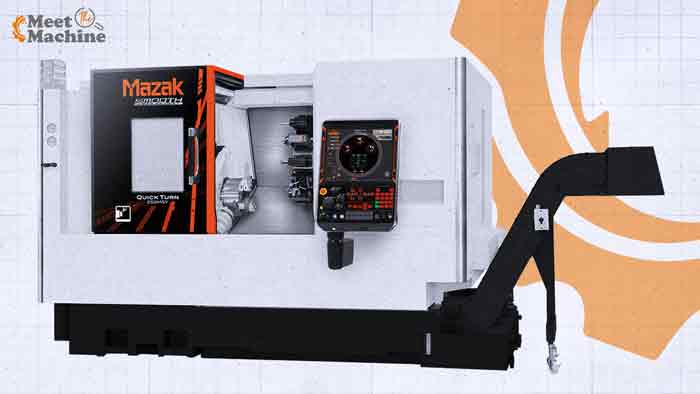
The Mazak QTN 200 is an 8 inch chuck CNC turning center, the smallest of the four main sizes in Mazak's Quick Turn Nexus line, which also runs 250, 350 and 450. QTN stands for Quick Turn Nexus, which is a generation of Mazak's Quick Turn family rather than a model of its own. In its most common configurations it turns roughly 10 to 11 inches in diameter, takes bar stock up to about 2.5 inches through the spindle, and runs a Mazatrol conversational control. Suffix letters after the 200 add capability: M for live tooling, S for a sub spindle, Y for a Y axis, in combinations up to MSY.
Nexus Is a Generation, Not a Model
Four different things get listed as "Mazak Quick Turn 200" and they are not interchangeable.
Quick Turn, or QT. The original family name. Still in use today on current machines, which is the source of most of the confusion.
Quick Turn Nexus, or QTN. The generation that carried the Nexus badge, which is the bulk of what you meet on the used market.
QTN-II. The second iteration of the Nexus generation. Later machine, later control, and usually a meaningfully different price.
Current Quick Turn. Mazak dropped the Nexus badge and went back to Quick Turn. A 2025 QTN-200 listing is almost certainly a current generation machine that somebody typed the old way.
This is why a seller saying "it's a Quick Turn 200" tells you almost nothing. Get the full model designation off the plate, get the serial number, and get the year. All three, before you talk about money.
A 2004 and a 2025 carrying the same three characters is not an edge case, it is the normal state of this model line. Mazak has kept the name alive across decades of real change underneath it, which is good for brand recognition and terrible for anyone shopping by model number alone.
The Letters, and What Each One Actually Does
Here is the decoder. Read it before you read a listing.
| Designation |
What It Is |
| QTN 200 |
Two axis turning. Chuck, turret, tailstock. No driven tools, no sub spindle, no Y. Turn, bore, face, thread, part off. Everything else goes to another machine. |
| QTN 200M |
Adds live tooling and a C axis. Now you can drill and mill on the turned part without moving it, as long as the feature is on the centerline or on a radius. |
| QTN 200MY |
Adds a Y axis to the live tooling. Off-center features become possible: flats, slots and holes that do not intersect the centerline. |
| QTN 200MS |
Live tooling plus a sub spindle. The part transfers to the second spindle and the back side gets finished in the same cycle. No second setup. |
| QTN 200MSY |
All of it. Live tooling, sub spindle and Y axis. Complete parts off one machine in one handling. Also the most expensive, the most complex to program, and the most machine to maintain. |
One thing the table cannot tell you: which of these you should buy. That depends entirely on the parts, and the honest answer for a lot of shops is less machine than they think.
What M Buys, and What It Demands
Live tooling is the upgrade that sounds most useful on paper and asks the most of the shop that buys it.
The value is real. A cross hole, a flat, a keyway or a tapped hole that would otherwise mean pulling the part off the lathe and setting it up on a mill gets done in the turning cycle. One handling instead of two, no second fixture, no tolerance stackup between operations, and no queue time waiting for the mill.
The demand is also real, and it comes in three parts. Driven tool holders are a consumable cost and they are not cheap, which is why used QTN listings sometimes include a separate line for tool holders. Programming a live tool cycle is a genuine step up from two axis turning, so somebody in the building has to know how. And the driven tool drive is one more thing to wear out, one more thing to service, and one more thing to check on a used machine.
If you have a part drawing with a cross hole on it right now, buy the M. If you are buying it because the next job might need it, be honest about whether you will ever program the thing. A two axis QTN 200 that runs every day beats an MSY that runs like a two axis machine because nobody learned the rest.
The Sub Spindle Is the One That Changes the Job
If you only get one letter, the argument for S is the strongest, and it is an argument about labor rather than capability.
Without a sub spindle, a part that needs work on both ends gets run, unloaded, flipped, re-chucked and run again. That second setup costs a fixture or soft jaws, costs the operator's time twice, introduces concentricity error between the two ends, and means the part is handled by a person in the middle of the process.
With a sub spindle, the main spindle hands the part across, the back end gets finished, and the part comes out the other side done. Add a bar feeder and the machine runs a completed part unattended from bar stock, which is the difference between a machine that needs an operator standing at it and one that needs an operator checking on it.
That is why an MS or MSY commands what it commands on the used market. You are not buying a spindle, you are buying back an operation and a person.
Four Inches of Y, Split Two and Two
The Y axis is the letter buyers understand least, and the spec is worth reading carefully.
On a QTN 200MY-II, Y travel is published as 100 mm, roughly 4 inches, expressed as 50 plus 50. That means 2 inches either side of centerline, not 4 inches of usable travel in one direction. It is a small number by machining center standards and it is not supposed to be a big one. The Y axis on a turning center exists to put a driven tool off the centerline, not to mill a part.
What that unlocks is specific: a flat that is not on center, a hole pattern that does not pass through the axis, a slot machined across a face rather than along a radius. Without Y, every driven tool feature has to intersect the centerline or sit on a radius from it. With Y, it does not.
Look at your actual parts. If the off-center features are inside two inches of centerline, Y solves your problem. If they are not, Y will not save you and the part belongs on a machining center.
The Numbers Underneath
Specifications vary by generation and variant, so treat the following as the shape of the machine rather than a spec sheet for any particular one. Always pull the numbers for the exact model and year in front of you.
Across the 200 class, Mazak publishes an 8 inch chuck. On the current Quick Turn 200 series the company lists maximum machining diameter between 13.78 and 14.75 inches and maximum machining length between 20.16 and 22.70 inches depending on configuration, with a 15 kW spindle, a 40 mm boring bar shank and a 25 mm turning tool shank.
On a QTN 200MY-II specifically, published figures include a maximum swing of 26.50 inches, a standard machining diameter of 10.87 inches, bar capacity of 2.50 inches, a spindle running 35 to 5,000 rpm with a 26 kW half-hourly rating, an MT5 tailstock with 21.75 inches of travel and 1,544 lbs of thrust, and a machine weight of 12,500 lbs.
Two things jump out of that. The first is the gap between swing and machining diameter. The machine will clear 26 inches over the bed, and you will turn about 11. That gap is normal on a slant bed lathe and it catches people who read the larger number. Same trap as reading swing over the bed on a manual engine lathe and forgetting about clearance over the cross slide.
The second is the bar capacity. Two and a half inches through the spindle is what makes this machine a bar machine, and pairing that with a sub spindle and a bar feeder is what turns it into an unattended cell. If you run bar, that number and the S in the model designation matter more than anything else on the page.
Mazatrol, and Which Control You Are Getting
Mazak introduced Mazatrol in 1981 as the world's first conversational CNC control, and it is still the reason a lot of shops buy Mazak. A machinist who can read a print can program a part at the machine without a CAM seat, which on a turning center covers a very large share of the work. We have written about where that control came from elsewhere.
For a used buyer the question is not whether it has Mazatrol. It is which Mazatrol. The control generation moved through distinct eras. Early Quick Turn machines ran the T series, T-Plus and T-32. Fusion 640 followed through the late 1990s and into the 2000s. Matrix came next, then Matrix Nexus, which is what a QTN 200MY-II listing will typically show. Current machines run the Smooth family, SmoothG and SmoothAi among them. That is the practical distance between the 2004 and the 2025 on our floor: same three characters on the tag, two control eras apart, and everything downstream of the control changes with them.
Why it matters: parts and service availability for the control, whether a modern post processor exists if you intend to run G-code rather than conversational, whether your existing programs transfer, and whether the operators you can hire have seen that screen before. Get the control generation in writing along with the model and year. It is not a detail, it is a large fraction of what you are buying.
U.S. Parts and Service
Mazak has been building machines since 1919 and manufactures for the North American market in Florence, Kentucky, which is a real advantage on a used machine. Parts are domestic, the service network is dense, and the operator pool that knows Mazatrol is large.
Resell CNC is the only used CNC dealer in North America with Official Mazak Trade-In Center status, and we currently carry 112 Mazak machines. That is the reason we can be specific about this brand rather than general.
How the QTN 200 Compares
In the 8 inch chuck turning center class the field a buyer actually shops is Mazak, Doosan and DN Solutions, Haas, Okuma, Hyundai Wia and Nakamura-Tome. We are not going to rank them on price here, because in the used market the variant, the year, the control generation and the hours move the number far more than the badge does.
What is specific to the QTN 200 is the control and the support density. Mazatrol has been in production since 1981 and Mazak has sold into North America across that whole span, so the pool of operators who already know the control is deep. The Kentucky manufacturing and service base is a real asset when a machine goes down. Against Okuma you are trading one proprietary control philosophy for another. Against Haas you are usually trading a lower entry cost for a different service and capability profile. Against Doosan and Hyundai Wia the comparison is closest, and it usually comes down to which control your people already know.
Within Mazak's own line, the step up to a 250 buys you more chuck and more bar, and the step across to an Integrex buys you full multi-tasking rather than a turning center with milling added. The QTN 200 sits where it sits on purpose: a turning center first.
Used-Market Value
Four things hold value on this machine, in order.
The configuration. An MSY is a different asset class from a base 200, and the gap between them is larger than the gap between model years. Buy the letters you need.
The control generation. A supportable control keeps a machine in the mainstream. An orphaned one takes a bite out of the number that does not come back.
Longevity. Well maintained Mazak machines routinely run 20 to 30 years in production, which is why a 2004 QTN 200 is a working machine rather than scrap. Long service life keeps a deep used market liquid, and liquidity supports resale.
What comes with it. Driven tool holders, a bar feeder, a chip conveyor, a tailstock, a steady rest and the tooling package are a meaningful share of the value on this machine. Get the list in writing. A machine with its tooling and a machine without it are two different purchases at the same headline number.
What to Check on a Used QTN 200
Confirm the full designation first. Off the machine plate, not the listing. QTN 200 and QTN 200MSY are separated by a great deal of money and the listing is not always right.
Main spindle. Run it through the speed range and listen. Check runout in the chuck. Ask for spindle hours if the control tracks them.
Sub spindle, if fitted. Cycle a full transfer, not a jog. The handoff is where a worn sub spindle shows itself, and a transfer that hesitates or drops concentricity is expensive.
Turret. Index through every station, not three. Listen for hesitation and confirm it locks hard each time. A turret that overshoots and corrects is telling you something.
Live tooling, if fitted. Run the driven tools under load, not in air. Check for play at the tool holder and confirm every driven station works, since it is common for one or two to have been ignored for years.
Y axis, if fitted. Move it through full travel both directions and check for backlash at the reversal.
Tailstock. Alignment to the spindle, and quill condition through full travel.
Control. Confirm the generation, that it boots clean, that it holds parameters through a power cycle, and that the machine recovers from an alarm on its own rather than needing to be walked back by hand.
Cut a part. Everything above can look right on a machine that will not hold size. If the seller will let you run a test part and measure it, that settles more than the rest of the list combined.
Resell CNC Take
Buy the configuration your parts need and not one letter more. Two expensive mistakes show up on this machine. One is paying for an MSY, running it as a two axis lathe for three years because nobody had time to learn the rest, and then selling it at a loss. The other is the reverse: buying a base 200 to save money and eating a second setup on every part for the life of the machine. Bring the part drawings to the conversation. They answer the question faster than the spec sheet does.
Who Runs One
The QTN 200 is a job shop and contract manufacturing machine. The 8 inch chuck and 2.5 inch bar capacity put it squarely on the parts most shops actually see: shafts, fittings, bushings, hydraulic and pneumatic components, fasteners, spacers, adapters, small housings.
It shows up in automotive and truck component work, in fluid power, in aerospace at the smaller end, in medical and dental for the sub spindle configurations, and across general contract turning. If your part fits in an 8 inch chuck or feeds through a 2.5 inch bore, this is the size class the work belongs in.
Frequently Asked Questions
What is the Mazak QTN 200?
An 8 inch chuck CNC turning center, the smallest of the four main sizes in Mazak's Quick Turn Nexus line alongside the 250, 350 and 450. QTN stands for Quick Turn Nexus, which is a generation of Mazak's Quick Turn family rather than a model in its own right. It typically turns 10 to 11 inches in diameter, takes bar stock up to about 2.5 inches through the spindle, and runs a Mazatrol conversational control. Suffix letters add capability: M for live tooling, S for a sub spindle and Y for a Y axis.
What do M, S, Y and MSY mean on a Mazak QTN 200?
M means live tooling with a C axis, which lets the machine drill and mill on the turned part without removing it. S means a sub spindle, which takes the part from the main spindle so the back side is finished in the same cycle without a second setup. Y means a Y axis, which moves the driven tool off the centerline so features that do not intersect the axis become possible. Combinations stack: MY is live tooling plus Y axis, MS is live tooling plus sub spindle, and MSY is all three. A plain QTN 200 with no letters is a two axis turning center.
What is the difference between a Quick Turn and a Quick Turn Nexus?
Nexus is a generation, not a separate model. Quick Turn is the family name Mazak has used across decades, the Nexus badge marked a particular generation of it, QTN-II marked a later iteration of that generation, and current machines have gone back to the Quick Turn name without Nexus. That is why a 2004 and a 2025 machine can both be listed as a QTN 200 while being substantially different machines with different controls. Always get the full model designation off the machine plate, plus the serial number and the year.
How much Y axis travel does a QTN 200 have?
On a QTN 200MY-II, published Y travel is 100 mm, about 4 inches, expressed as 50 plus 50. That is 2 inches either side of the centerline rather than 4 inches in one direction, which is the detail that is easiest to misread. It is deliberately a small number, because the Y axis on a turning center exists to move a driven tool off centerline rather than to mill a part. If your off-center features sit within about two inches of the axis, Y solves the problem. If they do not, the part belongs on a machining center.
What size chuck and bar capacity does a QTN 200 have?
Mazak publishes an 8 inch chuck across the 200 class. Bar capacity on a QTN 200MY-II is listed at 2.50 inches through the spindle. Maximum swing on that machine is 26.50 inches but standard machining diameter is 10.87 inches, and the gap between those two numbers catches buyers who read the larger one. Specifications vary by generation and variant, so pull the figures for the exact model and year you are looking at rather than relying on class averages.
Is a used Mazak QTN 200 worth buying?
For the right configuration, yes. Well maintained Mazak machines routinely run 20 to 30 years in production, Mazak manufactures for North America in Florence, Kentucky so parts and service are domestic, and Mazatrol has been in production since 1981, so operators who already know the control are not hard to find. The decision is about configuration rather than brand: match the letters to your actual parts, confirm the control generation is still supportable, and establish exactly what tooling and accessories come with the machine before agreeing on a number.
What should you check on a used QTN 200?
Confirm the full model designation off the machine plate rather than the listing, since the difference between a QTN 200 and a QTN 200MSY is substantial money. Run the main spindle through its speed range and check chuck runout. If a sub spindle is fitted, cycle a complete part transfer rather than jogging it, because the handoff is where wear shows. Index every turret station rather than a sample. Run live tools under load rather than in air and confirm every driven station works. Move the Y axis through full travel and check backlash at the reversal. Confirm the control generation, that it boots clean and holds parameters, and cut and measure a test part if the seller allows it.
What control is on a used Mazak QTN 200?
It depends entirely on the year. Mazak has run Mazatrol through several eras: the T series, T-Plus and T-32 on early Quick Turn machines, Fusion 640 through the late 1990s and 2000s, then Matrix and Matrix Nexus, and the current Smooth family including SmoothG and SmoothAi. A QTN 200MY-II listing will typically show Mazatrol Matrix Nexus. Get the control generation in writing along with the model and year, because it determines parts and service availability, whether your existing programs transfer, whether a modern post processor exists if you intend to run G-code, and how easily you can hire someone who has seen that screen before.
Looking for a Mazak turning center?
See what we have on the floor.
Resell CNC is the only used CNC dealer in North America with Official Mazak Trade-In Center status, backed by a team with 200+ years of combined industry experience and four AMEA and CEA certified equipment appraisers on staff.
Browse Used Mazak Machines
About the Author
Bill Murphy is the Marketing and Content Lead at Resell CNC, covering used machine tools, the brands behind them, and the history of the trade.
About Resell CNC
Resell CNC has bought and sold used CNC machinery since 2008. Based in Maitland, Florida, with warehouses in Winter Springs and Longwood, the team brings more than 200 years of combined industry experience and four AMEA and CEA certified equipment appraisers on staff. Resell CNC has been an MDNA member since 2009 and is the only used CNC dealer in North America with Official Mazak Trade-In Center status.